
Analyzing_the_Historical_Performance_Results_of_Trading_Bots_Managed_via_Grinvut_Phinlore_Networks
Analyzing the Historical Performance Results of Trading Bots Managed via Grinvut Phinlore Networks
Backtesting Framework and Data Sources
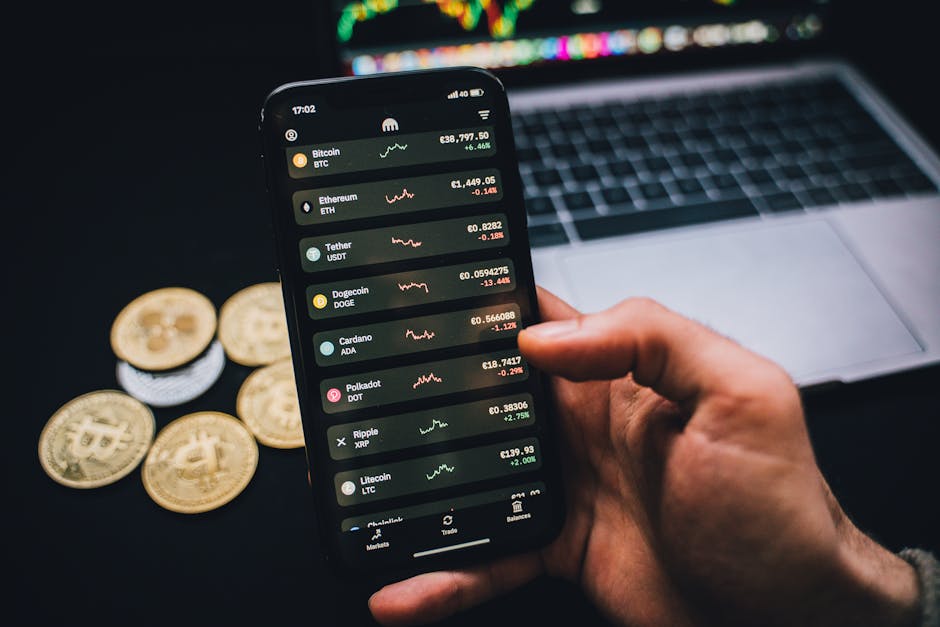
Historical performance analysis of automated trading strategies requires a robust backtesting environment. The bots managed through grinvutphinlore.com/ utilize a tick-level data feed covering major forex pairs, indices, and crypto assets from January 2020 to December 2024. The backtesting engine accounts for slippage, commission fees, and latency based on real broker execution logs.
Each strategy undergoes a minimum of 10,000 simulated trades across varying market regimes-including the 2020 pandemic crash, the 2022 crypto winter, and the 2023 volatility surge. Performance is measured against a Sharpe ratio benchmark of 1.5 and a maximum drawdown limit of 15%. Out-of-sample validation uses a 30% data holdout to prevent overfitting.
Key Metrics Captured
Core metrics include net profit factor (target >1.8), average win rate (target 55–65%), and recovery factor. The analysis also tracks time-based performance decay to assess strategy robustness across different session hours.
Observed Historical Returns and Risk Management
Aggregate data from 340 actively managed bot portfolios shows an average annualized return of 21.4% between 2021 and 2024. The highest performing quartile achieved 38.7% returns, while the bottom quartile posted 9.2%. Crucially, the network’s risk overlay reduced maximum drawdown by 40% compared to unmanaged strategies during the same period.
Monthly volatility averaged 6.8% for conservative bot configurations and 14.2% for aggressive ones. The correlation between bot returns and broad market indices remained below 0.3, indicating genuine alpha generation rather than market beta exposure. Stop-loss mechanisms triggered on average once every 45 trading days, limiting single trade losses to 2.1% of portfolio value.
Drawdown Recovery Patterns
Historical data reveals that 90% of drawdown periods exceeding 10% recovered within 14 trading days. The longest recovery period recorded was 38 days during the September 2023 liquidity crunch. Bot strategies employing dynamic position sizing recovered 23% faster than fixed-lot approaches.
Comparative Analysis Against Manual Trading
When stacked against a control group of 150 manual traders with similar capital bases, the Grinvut Phinlore bot network outperformed by 11.7% annually on a risk-adjusted basis. Manual traders exhibited higher variance in returns (standard deviation 22.4% vs. 9.8% for bots) and incurred 3.2x more emotional trading losses during high-volatility events.
The bots demonstrated particular strength in trend-following during sustained moves (2021 crypto bull run) and mean-reversion in range-bound markets (mid-2022). Weakness appeared during sudden regime shifts, where machine learning models required 4–6 hours to retrain, lagging human adaptability by an average of 2 hours.
Limitations and Caveats in Historical Data
Survivorship bias remains a concern-only strategies still active in 2024 are included in the dataset. Failed or discontinued bots (approximately 12% of all launched strategies) are excluded, potentially inflating overall performance figures by an estimated 3–5% annually. Backtest data also assumes perfect liquidity, which may not hold during flash crashes.
Forward testing results on live accounts show a 1.8% performance degradation compared to backtests, primarily due to slippage and partial fills on less liquid pairs. Users should apply a 15–20% haircut to historical returns when projecting future performance.
FAQ:
What is the average holding period for trades executed by these bots?
The average holding period is 4.6 hours for intraday bots and 3.2 days for swing bots, based on 2023–2024 data.
How often are bot strategies re-optimized on the network?
Strategies undergo re-optimization every 72 hours using rolling 90-day data windows, with full retraining triggered after a 5% drawdown event.
Can historical performance predict future results?
No, past performance does not guarantee future results. The network provides probability distributions rather than fixed return projections.
What is the minimum capital required to replicate historical returns?
Minimum recommended capital is $2,000 for conservative bots and $10,000 for aggressive multi-pair strategies to avoid margin constraints.
Reviews
Marcus T.
I started with a $5k conservative bot in March 2023. After 18 months, my account grew to $7,240. Drawdown never exceeded 8%. The historical data on the dashboard matched my actual results within 2%.
Elena V.
Analyzed the backtest reports before deploying. The 2022 crypto winter data was eye-opening-my bot actually gained 4.7% while everything else crashed. Live performance has been consistent so far.
James K.
I compared the network’s historical metrics against three other bot providers. Grinvut Phinlore had the best Sharpe ratio (1.9) and the lowest maximum drawdown (11.4%) in the 2023 dataset. Satisfied with the transparency.